interkriti®
YOUR GATEWAY TO CRETE
HOME
CRETE FACTS
NAVIGATE
EXPLORE
Agia Galini
Triopetra
Kissamos
Chryssi Isl.
Agia Marina
Balos
Gavdos isl.
Georgioupolis
SAMARIA
IDA Mtn
Palaiochora
Agia Roumeli
Sfakaki
Bali
Kalamaki
Matala
Lassithi
Plateau Lendas
Tsoutsouros
Vianos
Myrtos
Sfakia
Plakias
Ierapetra
Makrygialos
ZAKROS
Vai
Sitia
Agios Nikolaos
Elounda
MALIA
Hersonissos
Gouves
Chania
Rethymnon
Heraklion
GORTYN
FESTOS
KNOSSOS
|
Crete Image Library
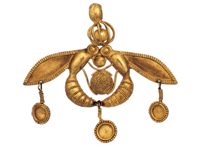
Gold bee pendant, from Malia
The famous gold jewel with the bees. Consists of two bees holding a piece of honeycomb between their lehs, a filigree `cage` containing a gold bead balanced on their heads and little dosks hanging down from their wing and sting. An exquisite example of Minoan goldwork, it combines hamering, filigree and granulation. From the necropolis of Malia (1800 - 1700 B.C.) - Heraklion Museum.
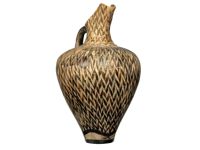
Elegant ewer from Phaistos
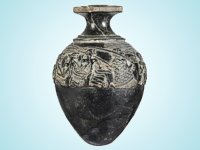
The Boxers Vase from Agia Triada (Heraklion Museum)
 |
|
|