History
and
Archaeological findings
Although the present resort is newly built, Agia Pelagia has quite a long history.
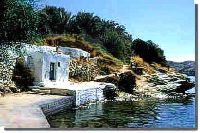
It took its name by the small chapel that belonged to the Monastery of Savvathiana and it was dedicated to Agia Pelagia.
The first excavation in the area where conducted by the famous archaeologist Evans, and they brought to light post-Minoan vaulted tombs with important pottery.
Regular excavations begun in 1971 by S.Alexiou. These excavations brought to light important buildings and pottery, dated from the middle-Minoan to the Roman period. The most significant finding was the Prytaneum (University) of the city built on the 4th century BC and destroyed on the 2nd century BC. In its interior where two firesides for the fire of the city which was kept always burning. The Prytaneum is built of stones and has a length of 15m and a width of 6.30m.
Nearby Prytaneum, is a cave named "Evresi", where the icon of Agia Pelagia was found.
In a location inside the Capsis Hotel, small houses where excavated, dated from the Hellenistic period of the city, as well as a pottery workshop where colored clay idols were manufactured.
This city was the ancient Apollonia, which was destroyed by the Cydonians in 171 BC and later recaptured by Knossos.
|
|
|
|